


How local flavours and cultures are influencing gin
From Argentina to Southeast Asia, producers are distilling local flavours and culture into their gins to generate fresh excitement across the category.
*This feature was originally published in the December 2025 issue of The Spirits Business magazine.
Classics are classics for a reason, and by their very nature they never go out of style. So it is with gin. With its crisp, clean, juniper-forward flavour profile, London Dry gin has ruled the roost for centuries, and remains the undisputed king of the category. But this hasn’t stopped a coterie of forward-thinking distillers from going rogue. Keen to push the category forwards in exciting and unexpected new directions, producers everywhere from Argentina to Southeast Asia are ripping up the rulebook and doing things their own way, creating characterful gins made with native botanicals that tell the stories of their land and culture.
Having blazed a trail with its whiskies, Japan is now attracting international attention for its gins, which are becoming ever more terroir-specific. “What excites me most about Japanese gin is the way that each prefecture expresses its identity through flavour,” says Dominic Dijkstra, director of mixology at the Waldorf Astoria Osaka. “A gin from Kyoto feels different to one made in Hiroshima or Hokkaido. You can taste the landscape in the bottle.” Dijkstra finds the “precision and restraint” of Japanese gin particularly appealing. “There’s an elegance to the way distillers approach balance. They weave in local botanicals with intention, creating spirits that carry a quiet intensity,” he says, citing Kyoto’s Ki No Bi, with its use of gyokuro green tea, and Hiroshima’s Sakurao Gin, which features locally grown yuzu and bitter orange, as examples of gins with a distinct regional identity.
At Netsu Bar in Dubai, sake sommelier Sourav Dutta uses Ki No Bi Gin in a cocktail called Echo of the Shamisen, a twist on a Martini featuring white Port and Junmai Ginjo sake presented in a masu box, traditionally used for serving sake. In Japan’s Chiba prefecture, Ukiyo Gin, which uses a rice distillate as its base and local botanicals such as sanshō pepper and sakura blossom, is inspired by the Japanese philosophy of embracing life’s fleeting pleasures. “Japanese gin delivers on precision, provenance and flavour,” says Richard Ryan, co-founder and CEO of brand owner and distributor Drinksology Kirker Greer. “There’s a strong global fascination with Japanese craft, and the use of native botanicals offers something different to consumers seeking authenticity without losing approachability.” For Ryan, things are just getting started: “Japanese gin is building momentum at a much faster pace than its whisky did in its early years,” he says. “Over the next decade, it will continue to grow its international following, helped by the broader global interest in Asian spirits.”
China is also one to watch on the gin front. “Southeast Asia and China have become some of the most expressive gin-producing regions in the world as the cocktail and spirits community continues to develop in these regions,” says Tom Hogan, co-founder of creative agency Studio Ryecroft in Singapore. “These gins are not simply using local ingredients for colour; they are redefining what gin can be in this part of the world.”
For Olivier Ward, founder of Everglow Spirits, the point of difference lies in the way producers are weaving culture, symbolism and ritual into their liquid. “In parts of Southeast Asia, Cambodian and Vietnamese gins like Seekers and Sông Cái use ingredients that carry clear ceremonial meaning, while in Mexico brands like Condesa lean into plants embedded in local rituals,” he says. “It speaks to how people gather and what they believe. Gin has become a vehicle for re-expressing those traditions in a different context.”
Culinary inspiration
With its hero botanicals of Sichuan pepper and Buddha’s hand citrus, boutique brand Peddlers Gin highlights how distillers are taking inspiration from their country’s culinary DNA. Founder Fergus Woodward is keen to represent modern China in a bottle. “The brand was inspired by the creative energy coming out of China,” he says. “We started as a group of friends in a garage on the backstreets of Shanghai, where you still find peddlers selling spices, teas, and herbs sourced from around China.” To build the brand, Woodward leaned on local bartenders. “Chinese bars are world class, and it’s great to see increasing recognition of them internationally,” he says. Hogan of Studio Ryecroft believes distillers in China and Southeast Asia are crafting their gins with mixology in mind. “Singapore’s Brass Lion is a clear example of how distillers here are shaping new ideas with the bartender in mind,” he says.
While many are having fun playing around with local botanicals, others hang their hat on more classic expressions. “Hong Kong’s N.I.P Gin experiments with tea and local botanicals in its limited releases, but the original Rare Dry remains the benchmark for me,” says Hogan.
This focus among emerging gin nations on mastering the classics is something Ward, of Everglow Spirits, feels is being overlooked amid all the talk of local botanicals. “One of the facts that often gets forgotten about is how many producers in Japan, Australia, and Argentina are making elite-level classic gin,” he says, highlighting Australia’s Never Never as a brand that’s pushing things forward with thoughtful new product development, while staying true to gin’s juniper-forward roots. “At the core of its range sits some of the best classic gin you’ll find anywhere in the world,” he says of the Asahi-owned brand. “They’ve found that sweet spot between a clear brand position and local botanical nuance.”
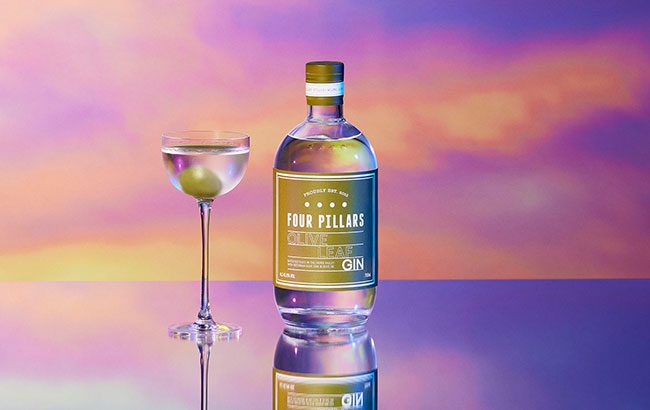
Forging its own path is Kirin-owned Four Pillars in Australia’s Yarra Valley, which makes a range of gins in a modern Australian style. “Australia is the most delicious place on earth, with our abundant sunshine, native botanicals, and our collision of Asian, Middle Eastern and Mediterranean flavour cultures, so our gins are an expression of all that flavour culture in a bottle,” says co-founder Matt Jones. On sale in 25 markets, various Four Pillars expressions are flying in different countries: Americans are going wild for the Olive Leaf Gin, while Brits are bonkers for the slightly sweeter Bloody Shiraz Gin. “Craft spirits are one of Australia’s best-kept secrets,” says Jones. “We’ve been famous for our wine scene for decades, but our spirits scene is under the radar. Gin in particular has a huge opportunity for growth.”
Tapping into the aspirational Aussie lifestyle, with its eternal sunshine and surf culture, is Byron Bay newcomer Papa Salt, which brands itself as a ’coastal’ gin, and comes housed in a beautiful blue bottle that looks like sea glass weathered by waves and salt water. Having the backing and star appeal of its megawatt co-founder Margot Robbie certainly helps, but it’s what’s inside the bottle that counts. To give the gin its saline edge, oyster shells rest with the botanicals in the still for up to 12 hours, but it’s the addition of native Australian botanical wattleseed that really rounds it out, according to co-founder Charlie Maas. “Wattleseed is the absolute star. Without it, the entire experience falls apart,” he says.
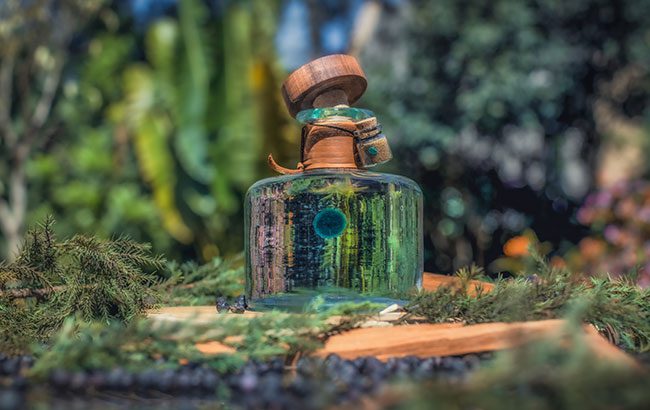
Taking a wine approach to gin in Africa is Kenyan brand Procera, which, with its hand-blown bottles and punchy pricing, is redefining what an African gin can be. Setting Procera apart is its use of fresh African Juniper. “The choice to distil with fresh juniper is the backbone of the brand and integral to everything we do,” says co-founder Guy Brennan. “Its fresh, green, nutty flavour profile is the star of the front palate, while selim pepper from Nigeria creates the structure and length on the finish.” Top drop Green Dot was inspired by Brennan’s dream to create the ‘grand cru’ of gins. “Green Dot is the most terroir-driven gin on the market,” he says. “This is a one-tree, single-vintage expression of fresh African juniper, with no additional botanicals.” Buoyed by a burgeoning cocktail scene, Procera is thriving in Kenya, and is the top-selling alcohol brand in Nairobi airport’s duty free. Out of Africa, you’ll find it on pour at high-end bars such as London’s Duke’s, Bemelmans in New York, and Atlas in Singapore.
Procera’s founding distiller, the late Roger Jorgensen, is behind another African gin brand with an interesting backstory. Collaborating with husband-and-wife team Les and Paula Ansley, he created Indlovu Gin (meaning ‘elephant’ in Zulu) using plant matter sourced from fresh elephant dung, which is dried and cleaned thoroughly before use. “We were very aware that Indlovu could easily be dismissed as a gimmick, which was the last thing we wanted,” Les Ansley admits. “We’ve had our detractors, but if you’re not provoking strong opinions you’re probably not doing anything interesting.”
The brand has its fans, and is exported to Europe, the US, and Japan. It gives back by donating to Herd, a charity that rescues and rehabilitates orphaned and displaced elephants. “Knowing the gin helps to contribute to elephant conservation is a hugely important part of our story,” he says.
Gin has had a hard time lately – IWSR forecasts the category will grow by just 1% in volume and value between now and 2029 (compared with 5% over the previous five years). The firm’s chief operating officer of research and operations, Emily Neill, reports that “mid-price brands are feeling the brunt of the ‘gin fatigue’ in traditional markets”, while “category growth has become increasingly polarised between value gins and super-premium-and-above craft gins”.
Ward of Everglow Spirits expects to see “more churn” as challenging conditions continue. “Some very good brands won’t survive the next few years, but we’ll also see more boutique producers appear in places like Southeast Asia, China, and India, where domestic consumption and know-how are rising in tandem,” he says, pointing out that the trend will put pressure on UK brands at export: “A British gin trying to build share in Shanghai, Tokyo, Sydney, or Mexico City now faces local players producing high-quality gins rooted in their own culture, which is making the export landscape far more competitive.”
While the category at large is struggling, pockets of growth around the globe fuelled by a rise in domestic production are providing a much-needed silver lining. Pal Gleed, director of The Gin Guild in London, says: “We’re seeing remarkable growth in regions that might once have been considered unlikely gin heartlands, notably Latin America, Scandinavia and Southeast Asia.” He believes further growth is on the horizon: “We’ll continue to see boutique producers emerge from diverse regions, bringing local character and innovation to the market, which will expand gin’s global footprint and enrich the category.” Not only are these new brands crafting compelling gins that could only come from one place, they are pushing gin beyond its classic European framework and changing the very definition of it, as Ward points out: “As the flavour map of gin continues to evolve it will push certain regions towards distinct styles that we don’t even have the language for yet.”
Fruits of the forest
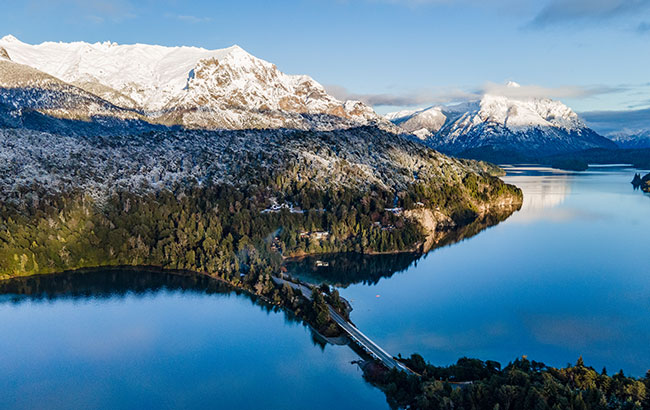
Argentine gin brand Bosque (meaning ‘forest’ in Spanish) is creating a twist on the classic London Dry style with the use of wild Patagonian juniper. “Patagonia is one of the most pristine and biodiverse regions on earth, and our gin captures the essence of that landscape,” says co-founder Juan Augusto Chereminiano, who spent years exploring Patagonia’s forests and mountains in search of native botanicals. “The wild juniper we use grows at high altitudes, and has a distinctive resinous character with a hint of citrus that sets it apart from European varieties,” he says. Keen to give back to the land, the brand invests in conservation initiatives that protect native forests and promote reforestation in areas affected by wildfires.
Exports are integral to Bosque, and its gins are on sale in 25 markets. “From the start we wanted to show that Argentina can produce world-class gin with a distinct identity and build a premium global brand from the south of the continent,” Chereminiano says. “Argentina’s craft spirits movement is full of creativity. Our producers aren’t trying to replicate London Dry; they’re expressing their terroir through native botanicals, mountain water, and local craftsmanship.”
Olivier Ward, Everglow Spirits’ founder, is equally enthusiastic about the prospects for Argentine gin: “Príncipe de los Apóstoles opened the door years ago, but Bosque has taken on the mantle as the international reference point,” he says.
Industry insights
How are you seeing locality and regional flavours influence gin drinkers?
Alex Watson – founder, Renais Gin
“They can all play a huge role in how gin drinkers connect with a brand. When they’re used well, they’re brilliant tools for emphasising craftsmanship, heritage, and differentiation. But they only work when they feel authentic and come with a real point of difference, and add depth to the flavour. So, for me, locality is at its best when it’s thoughtful, grounded, and truly part of the spirit’s character.”
Adam von Gootkin – founder and chairman, Highclere Castle Spirits
“Now more than ever gin drinkers want to understand the terroir, the history and soul behind a brand to earn their loyalty. In our case, Highclere Castle Gin is intensely place-driven. Our citrus comes from the orangery behind Highclere Castle, our lavender from the walled monk’s garden, and our oats grown on Highclere’s farm are for thoroughbred feed. We’re distilled in England’s oldest copper pot gin still. This keeps the brand authentic and allows our story to remain highly distinct from competition. Provenance and regionality are becoming a defining influence on both discovery and brand loyalty.”
Haigan Wong – master blender, GinPlz
“We’re seeing a real appetite for gins that tell a local story. Drinkers want to discover what makes each region taste unique – its botanicals, climate, and craft traditions. For us, using a rice-based neutral spirit and homegrown Mediterranean botanicals captures our roots and sense of place. It’s about flavour with feeling: familiar yet distinctive, crafted to transport people to the warmth of where it’s made.”
Vedran Milosevic – global managing director, Cygnet Gin
“Locality has become the ultimate premium cue for discerning gin drinkers who seek authentic provenance and genuine stories over generic spirits. Cygnet is proudly rooted in Wales – we use the purest Welsh Ice Age water, distil at Swansea’s historic Copperworks just six miles from Katherine [Jenkins OBE’s] childhood home, and our Cygnet 77 is aged in Welsh whisky barrels.
“What sets us apart in the ultra-premium segment is our unique flavour profile – 22 hand-selected botanicals including Manuka honey, which creates our signature silky-smooth finish that’s unprecedented in gin. We’re seeing tremendous enthusiasm in new markets like the US, where our British heritage and Katherine’s authentic connection to Wales resonates powerfully.”
Related news
Diageo shuts Aviation Gin visitor centre
The Singleton gets packaging revamp
Brand ambassador sues Campari America alleging wrongful termination