


For peat’s sake: how spirits firms are restoring Scotland’s peatlands
We explore how Scotch producers are helping to resuscitate one of Scotland’s most important carbon stores.
*This feature was first published in the January 2026 issue of The Spirits Business magazine.
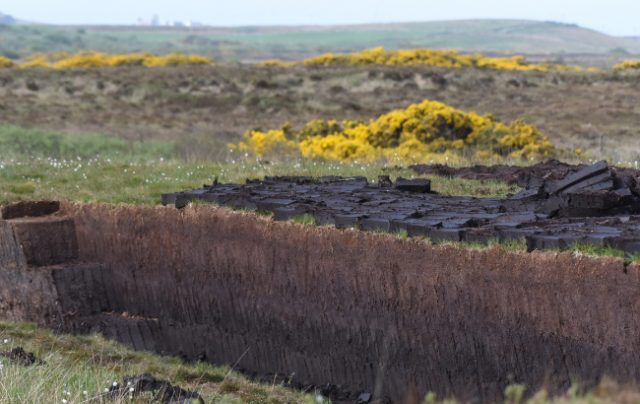
Although only covering approximately 3% of the Earth’s land surface, peatlands are the most effective terrestrial carbon stores on the planet. Scotland is home to a significant share of these ecosystems, with peatlands spanning roughly 20% of the country’s land area and holding an estimated 1.6 billion tonnes of carbon.
Beyond carbon storage, healthy peatlands support biodiversity and help maintain local water quality. But despite their vital role, more than 80% of Scotland’s peatlands are degraded, and in this condition, they act as net carbon emitters, accelerating rather than mitigating climate change.
However, driven by a reliance on peat for the distinctive smoky flavour featured in some whiskies (when compounds are released by the peat fires used to dry malted barley), alongside a broader commitment to environmental stewardship and achieving net-zero emissions, Scotch producers are stepping up efforts to restore the peatlands from which one of their key production ingredients is taken.
While the Scotch whisky industry uses a relatively small quantity of peat from a handful of sites in Scotland, there is a universal agreement across the industry that producers hold a collective responsibility to preserve and restore this vital habitat.
In 2023, the Scotch Whisky Association (SWA) published The Commitment to Responsible Peat Use, a sector strategy that outlines how the industry is extracting peat as responsibly as possible, using it efficiently while also driving peatland restoration.
In it, the SWA notes many of its members are already engaged in the active restoration of peatlands, with some distilleries invested in adjacent land stewardship projects that contribute to supporting biodiversity and the local habitat.
One such project includes Diageo’s recent commitment of £5 million (US$6.56m) to the restoration of up to 3,000 hectares of degraded peatlands across Scotland by 2030.
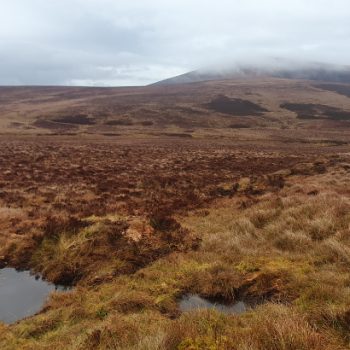
Freddie Ingleby, managing director of peatland-restoration company Caledonian Climate, which has partnered with Diageo to deliver this pledge, says this is the biggest commitment any organisation has made to Scottish peatland restoration. “The most exciting thing is that the flexibility that Diageo is giving is colossal, in that they want this to be the seed that attracts other people, so they’re leading it and they’re launching it, but it’s actually quite sector-agnostic.”
Ingleby notes there is an ambition to get maltsters involved, but at present they are – for reasons unknown – not part of the conversation. “They would love to get a broader participation from corporates in the UK, as well. The hope is that it grows to be a vessel that can carry funds from a sector-agnostic position to deliver real impact at scale.”
When the pledge was announced, Ewan Andrew, president of global supply and chief sustainability officer at Diageo, said: “I am canvassing strongly for others to continue to join us as we look to drive successful systemic change in Scotland’s landscape restoration in support of future economic growth, and sustainable Scotch whisky production for the decades and centuries to come.”
Coenraad Krijger, CEO at Wetlands International, notes the collaboration with Diageo and Caledonian Climate will inspire other businesses to follow this example elsewhere in the country and around the globe.
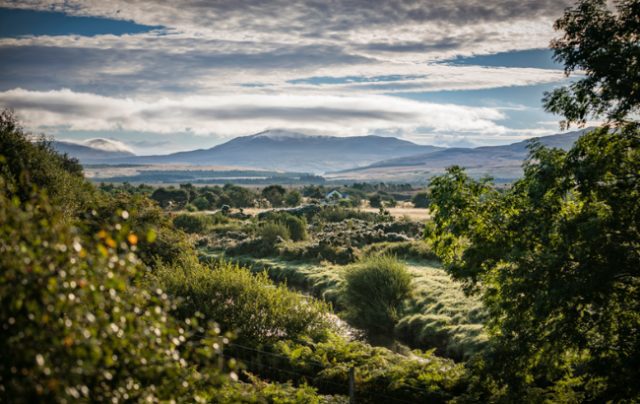
Ingleby explains that beyond the social responsibility felt by the whisky industry to restore the peatlands, there is a practical incentive, too. “Seventy percent of Scotland’s drinking water comes from peatland dominated habitats,” he says, adding that 72% of all reservoir capacity in the UK for raw water is fed from peatland-dominated habitats. A spokesperson for Ardbeg owner The Glenmorangie Company explains: “Peatland restoration holds water better, reducing the risk of floods and wildfires – and improving water quality.”
Whisky and water
With water being a vital ingredient of whisky production, these restoration efforts will benefit the sector as a whole – not just the producers crafting peated whisky – future-proofing the industry by increasing resilience and reducing the risk of running out of this key natural resource, and thereby safeguarding production processes for the long term.
However, restoration is a costly undertaking. Excluding design and development at the front end, and monitoring after completion, Ingleby says it costs on average of £1,500 per square hectare of work, but the price is determined by the complexity of the erosion, the access, the type of vegetation and altitude, as well as other factors. “If you get into more complex forest to bog restoration, you can easily be at £5,000-£6,000 per hectare. I’ve seen projects where it’s all handwork for a long period of time, and it can be £40,000 per hectare.” This reaffirms the importance of companies such as Diageo bringing financial backing to the cause.
Diageo, which owns traditionally peated Scotch brands such as Caol Ila and Oban, has also formed a landmark partnership with the RSPB (Royal Society for the Protection of Birds) Scotland, alongside Laphroaig owner Suntory Global Spirits and The Glenmorangie Company. The trio united in November to help to restore peatland at The Oa nature reserve on Islay – one of Scotland’s most iconic landscapes, and the region best known for producing peated whiskies.
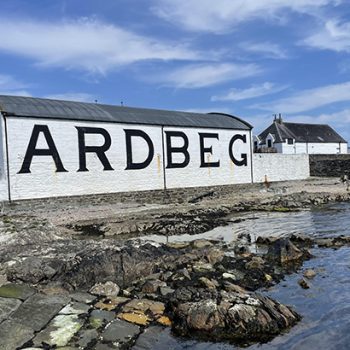
Over the next five years, the distilleries will collectively contribute £1.6m to restore approximately 1,000ha of peatland on the island. The focus will include making the peatland more resistant to flooding, improving resilience against wildfires, and providing improved habitats for many species, transforming the landscape into a healthy, thriving blanket bog.
The Glenmorangie spokesperson adds: “Through this trailblazing project, the partners recognise that nature is a shared asset, and that by bringing together conservation expertise, and pooling industry resources, peatland restoration can be achieved at a scale and pace that none of the partners could achieve alone. “ The partnership also illustrates the whisky industry’s wider commitment to responsible peat use, highlighting how a sector deeply intertwined with Scotland’s cultural heritage is now playing its part in restoring and protecting the nation’s natural heritage.
Colossal scale
The scale of the restoration needed in the UK as a whole is colossal. Ingleby says in England, 280,000ha of peatlands need to be restored, while in Scotland, that number varies from 600,000ha to 900,000ha “depending on who you speak to and what parameters they put into place”. But, he says, 90,000ha have been restored in the past 15 years, and Scotland has a target of restoring 250,000ha by 2030. The country has also set a goal to restore 400,000ha by 2040, with £250m committed to support these efforts.
Meanwhile, England has a target to restore 40,000ha of peatland by 2030, supported by £85m under its Environmental Impact Plan, which was revised in November to reassert the plan for restoring approximately 280,000ha of peatland in England by 2050.
While these numbers are large, and the time needed is long, Ingleby says as soon as restoration interventions are implemented, such as damming drainage ditches and rewetting the peat, the peatland stops emitting as much carbon, and greenhouse gas emissions are reduced from day one. The ecological response is also rapid: pools refill with water within about 24 hours, and invertebrates like dragonflies and butterflies return and begin to repopulate the site quickly after restoration.
Kristin Hughes, global senior vice-president for sustainability at Diageo, says: “By bringing together diverse expertise, resources, and shared commitment, we can accelerate progress toward real, measurable results.”
Related news