

SB visits… Chablis with Renais
It’s not often The Spirits Business spends a weekend in one of the world’s most famous winemaking regions. But when Renais invites you to the annual Fête des Vins de Chablis, you accept to learn how the area influenced its terroir-forward gin.
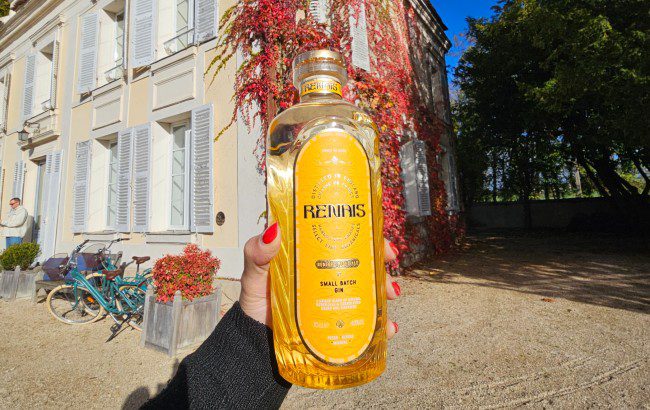
“We’ve been coming to [the Fête des Vins de Chablis] every year since I was a kid. Basically, the culture of the winemaking and the experience, and the philosophy – and everything you’ve seen or taken part in today – that sort of environment was a big inspiration for me to work in drinks in the first place,” explains Alex Watson, who founded Renais Gin alongside his sister, actor Emma Watson. It’s a unique occurrence to have the worlds of wine and spirits closely intertwine on a press trip – and one I relished while spending the weekend at the annual Fête des Vins de Chablis at the end of October.
“There’s no direct link between the festival and Renais, but it’s all part and parcel of what I think makes Chablis so captivating and impressive – especially the town and the place, and all of those things contributed to the sort of product I wanted to make,” Alex adds. Renais is a gin inspired by Chablis, and crafted with upcycled grape skins, salvaged after pressing for wine.
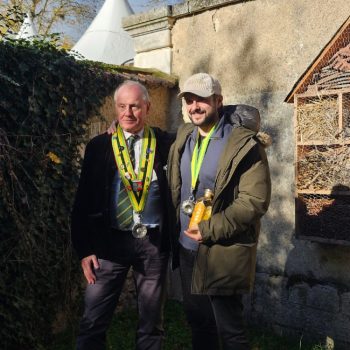
Alex’s father, Chris Watson, is integral to the journey to Renais. Over more than 30 years, Chris, an accomplished lawyer and founder of Domaine Watson, has planted and cultivated seven small vineyards in Chablis and Irancy in France. He is the only Englishman to have been made a ‘pilier of Chablis’ – a title bestowed on a handful of winemakers creating top-tier wines and protecting the region for future generations.
After spending a weekend with both Chris and Alex during the Fête des Vins de Chablis, their deep-rooted respect for Chablis and its winemakers is palpable.
“We feel like very lucky guests here, and we want to treat these people who’ve been so kind to welcome us in over the past 30 to 35 years with respect,” Alex explains. “Chablis is this tiny village that’s a worldwide, famous wine-producing appellation – it’s minute; it sits on an already very clearly delineated winemaking appellation in Burgundy. What it’s doing is incredible. That’s why we always want to be really clear about the relationship between Chablis and Renais as a source of inspiration. We’ve got this beautiful product, which is inspired by the terroir and the people.”
Sharing the ‘terroir’ of Renais Gin
‘Terroir’ is a term Alex is eager to celebrate through Renais. From the texture of the gin bottle, specifically designed to emulate vines, to the flavour of the spirit, Renais strives to showcase the best of France and England – much like Alex’s family history.
“We’ve now put ‘terroir’ on the bottle,” Alex says. “For me, I think our USP would be: this is an attempt to replicate terroir and embrace winemaking techniques and philosophy. I think that’s what sets us apart from any other gin.”
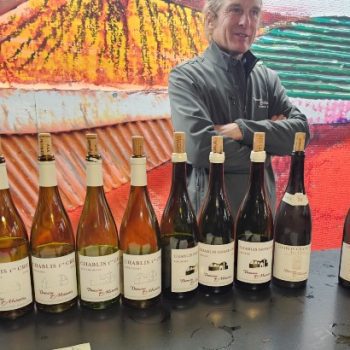
We experience Renais’ terroir, its sense of place, first-hand during the weekend while happily trudging through muddy vineyards owned by Domaine Watson and Domaine des Malandes. The family-owned Domaine des Malandes was established in Chablis in 1972, and is led today by second-generation winemakers Richard Rottiers and Amandine Marchive.
Richard generously shared his knowledge about winemaking in Chablis – soon followed by a vertical tasting of around a dozen different vintages. He is a prime example of the community and collaboration available in Chablis, gladly allowing Renais to use Domaine des Malandes’ pressed grand cru grapes, and gifting the grand cru cask used to mature Renais Grand Cru Cask-Aged Gin. The region is, by and large, embracing new ways of working and innovation – all capable of unlocking even greater potential for this small but mighty winemaking region.
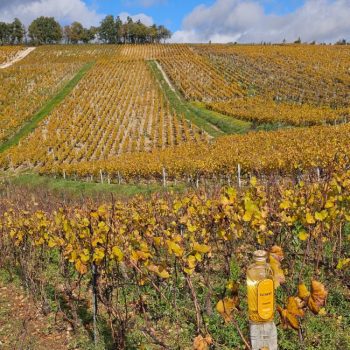
“What I want consumers to understand is there’s this beautiful gin that’s distilled from wine-pressed grapes, and that’s really unique and really difficult. It imparts all of these beautiful flavour profiles and characteristics to the gin,” Alex adds.
“The passion behind the produce, the effort that goes into producing the wine, that idea of terroir and a sense of place – all of those ideas are fundamental to what I wanted to do with Renais. It’s the essence of the place, and the festival, and the people, with some of the same values, the same ingredients – I wanted to carry that forward into the product. It’s kind of like taking people to the source.”
Sustainable, cost-effective growth
Alex has ambitious plans for Renais. At the start of the year, the brand raised £4.95 million (US$6.18m) worth of investment to support further international expansion and its continued growth in the US.
Yet, at a time when costs are increasing worldwide, Renais is bucking the trend. Behind the scenes, the brand has quietly reduced its price on the Renais website. I ask Alex why, and how he’s been able to make this move.
“There are a couple of reasons,” he explains. “One is finding certain efficiencies in our supply chain with different suppliers, so getting better cost prices on different materials. But the big one is scale. The volumes we started producing from year one to year two, to where we are now, is kind of double. Initially, we were working with our distillery to produce fairly small batches, whereas now we’re able to produce on a much bigger scale. That’s basically one of the biggest cost items. It’s really just economies of scale and finding that’s a better price point.”
Alex and the team could have continued keeping Renais at its higher price point. However, his hope is to bring Renais to even more consumers – and he’s savvy to the role price plays in that goal.
“For years one and two, Renais has really sat primarily in quite high-end cocktail bars and independent retailers,” he continues. “But now you’ll start to see us in other establishments, with bigger national on- and off-premise groups.
“I want to really reach a much broader consumer, and that needs to reflect in our pricing strategy as well.”
Related news
SB visits… Volcan de mi Tierra