


Rod Stewart’s whisky brand booms in Germany
Wolfie’s whisky has experienced its strongest trading year to date, with Germany becoming its fastest-selling launch market.
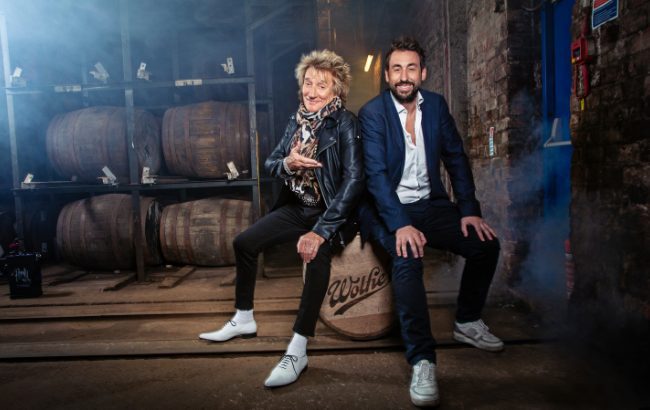
Music icon Rod Stewart teamed up with Duncan Frew and Loch Lomond Distillery to launch Wolfie’s, a blended Scotch brand, in May 2023.
The brand has expanded to 25 markets, including three new countries this year – Germany, the Netherlands and Argentina.
Wolfie’s counts the Netherlands, Argentina, the US and the UK as its largest markets.
Germany has also now become one of the brand’s biggest, despite only launching there last month.
In just over two weeks, the brand sold more than 2,000 bottles across 800-plus Kaufland stores in Germany.
Germany is a key market for Scotch whisky exports – the ninth biggest for the category, according to the Scotch Whisky Association (SWA).
Scotch exports to Germany fell by 14.2% in value in 2024 to £169 million (US$213m), a decrease from £197m (US$248m) in 2023. This also marks a drop from 2019, when Scotch exports to Germany were worth £185m (US$233m).
The European market was one of the only top 10 countries to report a volume decline in exports last year. Scotch exports to Germany decreased by 6.1% in 2024 to 56m bottles, a decline from the 59m bottles in 2023.
However, exports to Germany have risen by double digits (12.6%) since 2019, when the country imported 50m bottles.
“Germany’s appetite for whisky has been building for some time, and what really surprised us was just how quickly Wolfie’s moved – entirely through physical retail,” Frew noted.
“In many cases, our own digital ads outperformed content tied to Rod, which shows the strength of the product and brand on shelf.”
The brand has also seen a 100% increase in new listings globally this year, with 88% within the off-trade. In addition to supermarket chain Kaufland and its sister brand Lidl, the brand has secured a listing in alcohol retailer Gall & Gall in the Netherlands.
‘Build authenticity before scale’
The brand aims to “build authenticity before scale”, says Frew, with its expansion driven by a disciplined route-to-market strategy, cultural timing and a focus on markets where blended Scotch is growing.
He explains the brand was built as a “rock ‘n’ roll whisky”, rather than a traditional brand, and is rooted in “music culture, rebellion, late nights and doing things your own way”.
Frew added: “We want to activate locally without over-commercialising the brand so we can enter new territories with a built-in awareness, not artificial hype, and let demand lead distribution, rather than the other way around.”
Looking forward, Frew identifies Germany, France, the Netherlands and Argentina as markets with the strongest long-term potential.
Globally, the bottled blended Scotch category saw exports rise by 4.4% in value last year, representing 59.4% of total Scotch whisky global exports, according to SWA data. Single malts, on the other hand, declined by 17.2% in value to £1.72bn (US$2.3bn) last year.
Total global Scotch exports were down by 3.7% in value last year, but grew by 3.9% in volume.
Related news