


Bluff Distillery: reviving New Zealand’s southern soul
At the very bottom of New Zealand’s South Island, one distillery is rebuilding belief in what a spirits producer can be to a place.
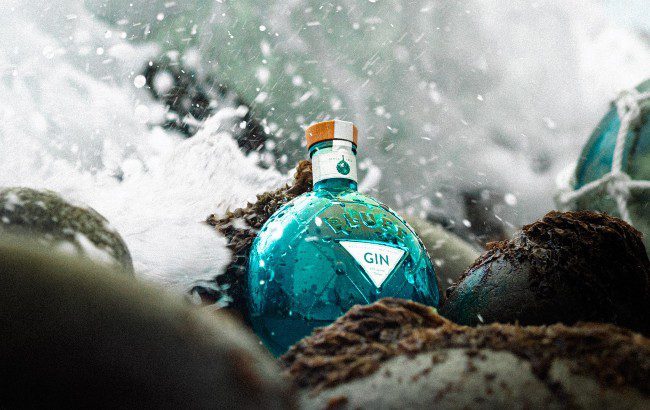
If you drive as far south as the New Zealand mainland will take you – beyond the rolling farmland, past the last scrubby and onto an empty road – you’ll eventually reach Bluff. It’s a port town perched at the edge of the Pacific, where the Tasman Sea collides with the Southern Ocean.
It is here, just 30 metres from the Foveaux Strait, that one of New Zealand’s most exciting gin stories is unfolding.
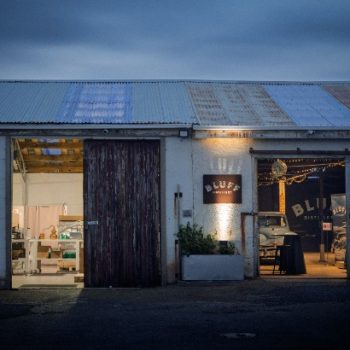
Housed inside an abandoned industrial works that once powered the town’s economy, Bluff Distillery is bottling more than spirits; it is showcasing community resilience.
Bluff is not an easy place to live in. It is remote, exposed, and relentlessly windswept. But according to distillery founder and general manager Chris Fraser, that is precisely what gives the gin its spine.
“We’re on the thinnest part of New Zealand,” Fraser explains. “We’re lashed by both coastlines every day, and the southerlies here can be absolutely bone-chilling. We can’t scientifically explain it, but all of that somehow finds its way into every bottle.”
The distillery’s location, in an old freezing works that closed in 1991 after more than a century of operation, sits on one of the most elemental coastlines in the Southern Hemisphere. It is battered by weather, steeped in salt, and surrounded by seabirds, tides and currents. In Fraser’s view, it’s this physical environment that becomes inseparable from the liquid.
“Bluff Gin is a classic London Dry,” he says. “But it’s a London Dry that cannot be made in any other place; it is unique.”
This year, Bluff London Dry was awarded a Master Medal at The Gin Masters, making immediate international waves for a distillery that only began production in March 2024 (exactly 200 years after the town was founded in 1824).
The judges’ comments read like a sensory map of Bluff itself: “Salinity on the nose, coastal, seaweed. Lots of pepperiness on the palate with a hint of smoke”, and “a step above the rest in terms of complexity.”
“There’s a toughness to the flavour,” Fraser says. “But it’s balanced. It’s not aggressive — it’s confident.”
“To receive those comments from such an experienced panel was incredibly humbling,” Fraser continues. “It showed us that what we’re doing here – drawing from this environment, being led by place – actually translates on the world stage.”
Bluff was one of New Zealand’s earliest settlements, once driven by shipping, whaling, fisheries and freezing works. But when the building that now houses the distillery fell silent, the town followed a familiar pattern: employment drained away, families moved north, and the economy contracted.
The decision to establish a distillery in Bluff was never detached from that history. “This place has had its ups and downs,” Fraser says. “Bluff Gin was always about doing something meaningful here, to help rejuvenate a town that had worked hard and deserved a future.”
While many distilleries rush to create multi-product portfolios, Bluff does the opposite. It produces only one gin.
“We’re unique in that way,” Fraser says. “Everything goes into making this one liquid the absolute best expression of Bluff we can.”
And that philosophy has shaped everything from ingredient selection to production and sustainability. “We make it in harmony with our local environment,” Fraser adds. “We’re careful with resources. We recycle heat. We avoid single-use plastic. Sustainability isn’t marketing here; when you live in a place like this, it’s second nature.”
A flavour map of the south
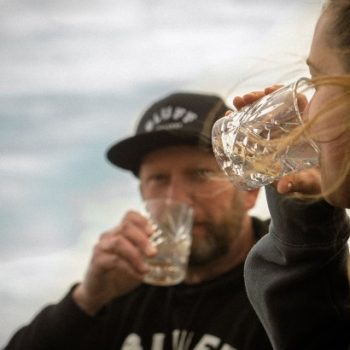
Bluff London Dry opens green and medicinal, with menthol, crushed herbs and sea air. Then comes juniper and spice: cracked black pepper, dry heat, a subtle smokiness that lingers long after the glass is empty.
Fraser explains: “My go-to is a Bluff G&T with lemon and Fever Tree Mediterranean tonic, but our local classic is the Martītī – our Martini with local identity.”
Instead of the traditional anchovy garnish, the Martītī features a piece of tītī, a seabird harvested seasonally by Māori with ancestral lineage to the islands of Foveaux Strait. “It’s a beautifully local detail,” Fraser says. “It anchors the drink in this place.”
There’s a wider truth emerging here, one increasingly recognised by the global spirits industry: distilleries can rebuild towns.
From Campbeltown to Kentucky, spirits producers have become community drivers; they are restoring buildings, creating jobs, driving tourism and reviving civic pride. Bluff Distillery now sits firmly within this movement. “When people talk about Bluff now, it’s not just oysters and the weather anymore,” Fraser reflects. “It’s gin, it’s flavour, it’s something new.”
Already, the team is planning a multi-phase expansion of its hospitality offerings. “In the near future, we’ll open a full visitor experience,” Fraser says. “We want people to come here for a drink, for food, for a sense of what Bluff feels like – not just what it tastes like.”
Related news
Nemiroff De Luxe lands in New Zealand